
Ignite
Sandbox

project overview
Role
Product Designer
Duration
Piloted, then paused
Methods
PMs, Engineer
Methods
Market research, surveys, focus groups, branding, design systems
01
problem
There was no brief. The ambiguity was the brief.
Sandbox wasn't testing whether I could execute a known design problem well. It was testing whether I could think clearly and move quickly while the problem itself kept changing. Communication across disciplines got harder as the team got tired: as pivots piled up and burnout crept in, the gap between what stakeholders were thinking and what they were communicating to me started to widen.
The deeper problem, one I didn't fully recognize until later, was in how I was responding to that uncertainty. Faced with a constantly shifting product direction, my instinct was to produce something polished and visual as fast as possible, partly to give the team something concrete to react to, and partly because ambiguity made me uncomfortable. That instinct meant I was sometimes designing answers before the team had actually validated the question.
02
process
Building Ignite, then rebuilding it for a different audience.
From the initial findings, we moved through several distinct rounds of design and testing. Each round addressed a specific problem the previous round had revealed.
Direction 1
Ignite: interactive psychology education for teens.
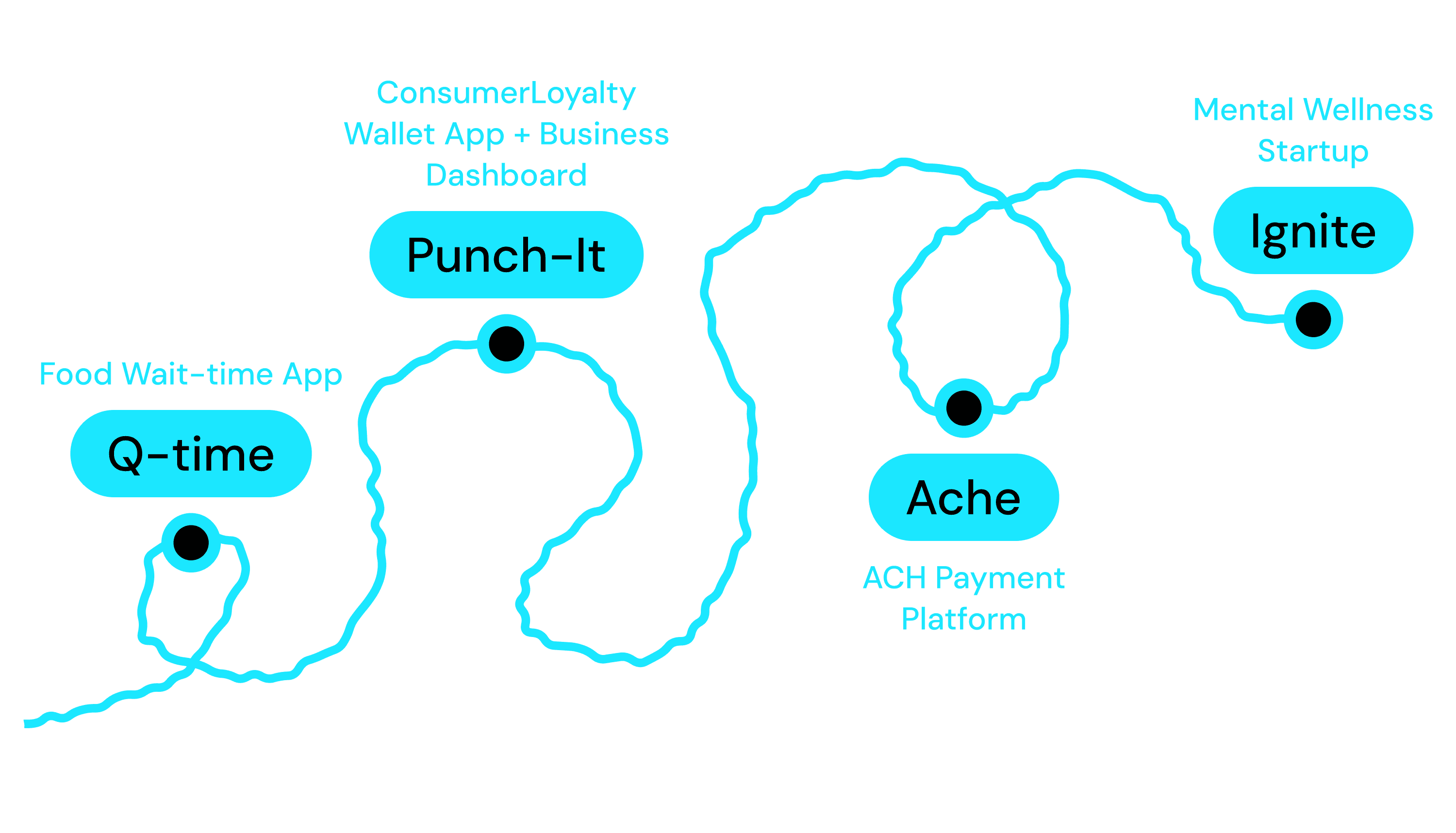
My new team's project managers wanted to address the mental health effects of the digital age, specifically for teenagers. After secondary research pointed us toward teens as the target audience, we partnered with Campfire, a platform already proven to improve connection and wellbeing in workplace settings, to deliver six interactive lessons covering topics from recognizing emotions to media literacy. Each lesson had a pre- and post-session survey built in, so we could measure whether the content was actually shifting how participants felt.

Direction 2
A pivot in audience and approach when red tape stalled the rollout.
Early results were strong (more on that below), and we had three Utah schools lined up for a six-week pilot. But getting parental consent for minors created administrative friction the team couldn't quickly resolve, and the lesson program stalled. Rather than wait, we pivoted toward a Gen Z audience that didn't require that layer of consent, shifting the focus from structured teaching to community and collective action.
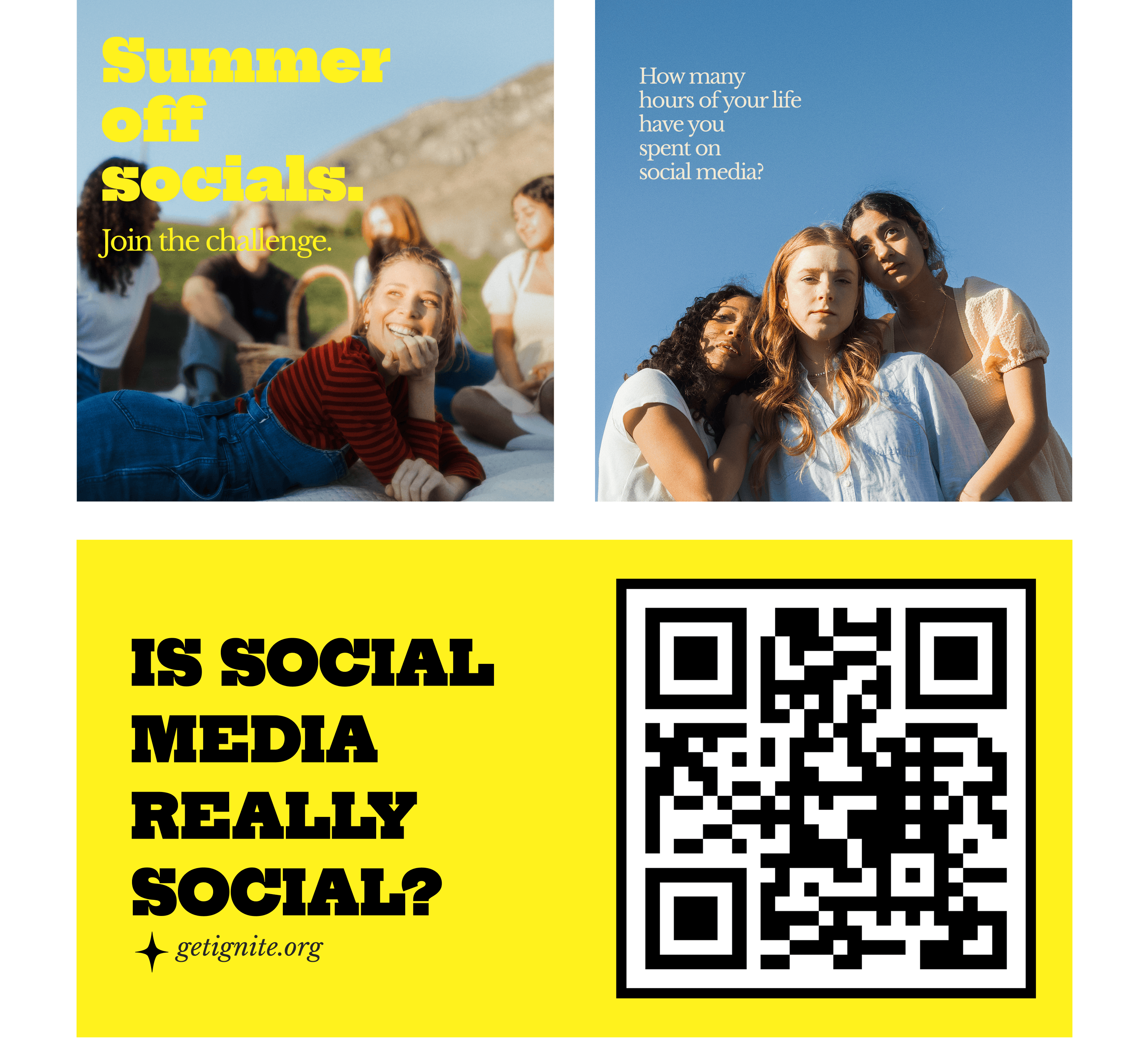
Research, including a focus group finding that 58% of college students would prefer a world without Instagram or TikTok, told us the deeper issue was that quitting social media alone doesn't work when everyone else is still on it. The response we built was the Summer Off-Socials Challenge, inviting people to disconnect together rather than alone.
03
solution
My contributions: brand, system, and the visual language for two very different audiences.
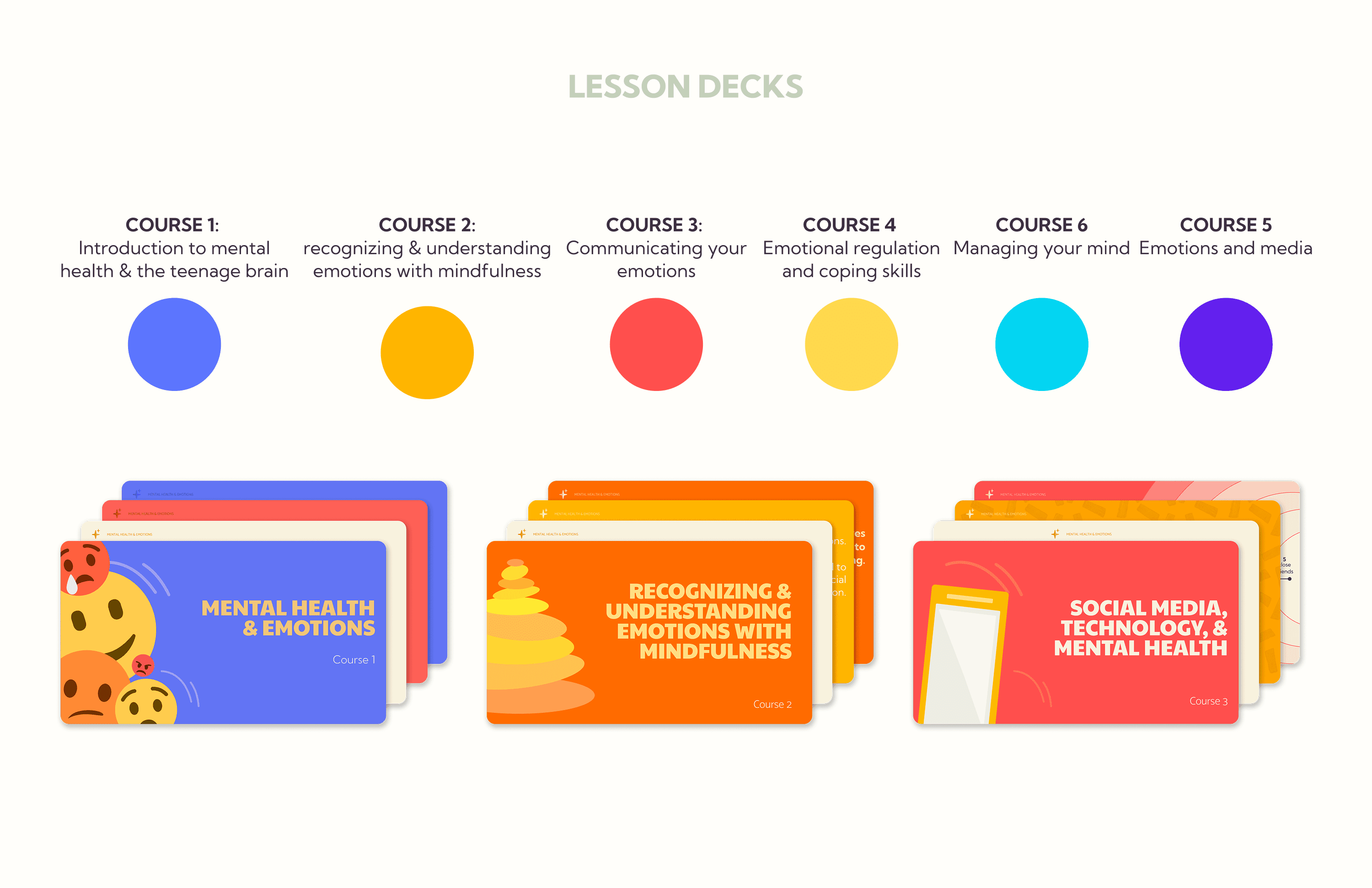
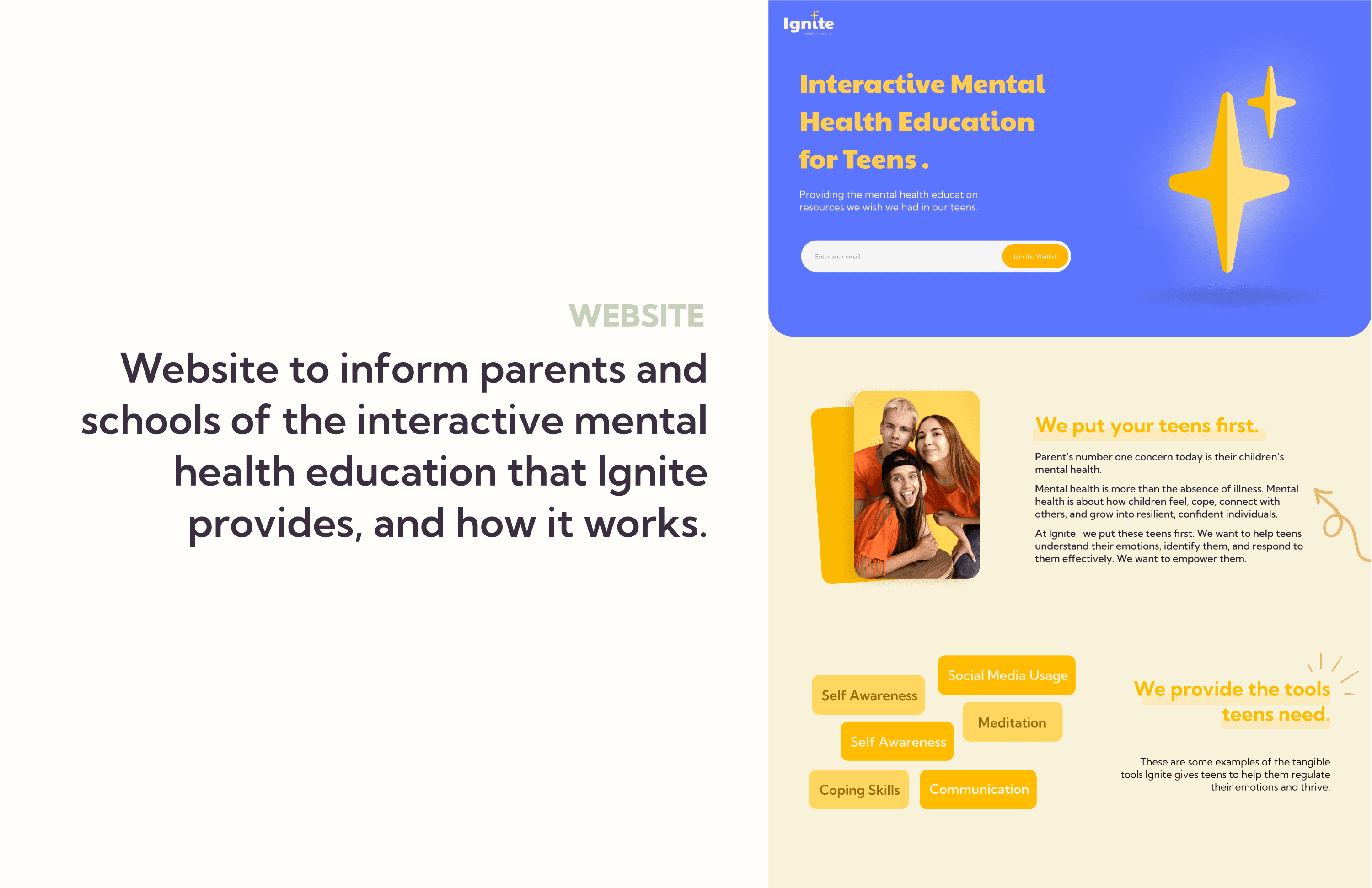
Across both directions, I owned every visual asset the team produced. For Ignite, I built the brand identity and design system from scratch: a wordmark with two sparkles resting on the lowercase "i," meant to suggest companionship and the spark of starting fresh, paired with rounded type and a vibrant palette designed to feel warm and approachable to teenagers. I extended that system across six distinct lesson decks, each with its own visual theme, while keeping them cohesive through shared color rules and typography. I also designed the program's website, aimed at parents, schools, and learners.


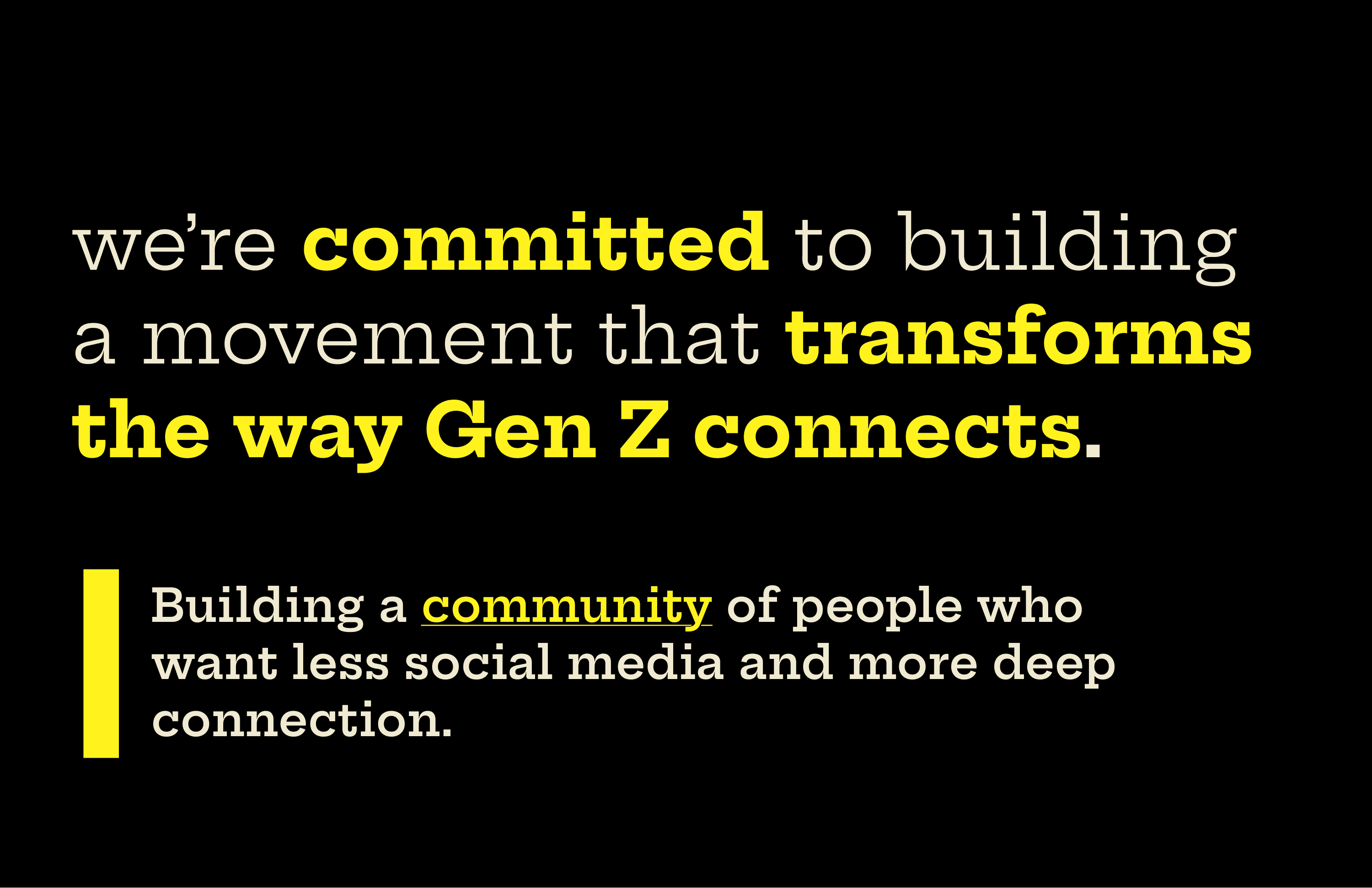
When we pivoted to the Gen Z audience, I rebranded the same identity into something edgier and more mature: a new website framing the vision and the Off-Socials Challenge, and a set of print materials, a newspaper playing on the nostalgia of analog media, vinyl stickers, and flyers, all designed to invite people into the movement and the Slack community we built around it.



Separately, and not as an official part of the team's roadmap, I started designing and building an app called Talk!, using AI to help people stay meaningfully connected to chosen loved ones. It was my own attempt to explore the same loneliness problem from a different angle.
04
outcome
98% of learners reported positive change, 203 committed participants for the challenge.
Ignite's early test sessions, run with more than 30 teens, showed 98% reporting positive emotions after a session, compared to just 10% before. That result is what earned the three-school pilot opportunity. The Off-Socials Challenge also gained real traction, with 203 people committing to participate within three weeks of promotion.
I left the team before either direction reached a full resolution, balancing the program alongside a full-time role and the broader uncertainty that still surrounded Ignite's path forward. Neither outcome is a clean win, but both validated that the underlying problem space, teen mental health and disconnection in the digital age, was real and worth solving.
03
reflection
Validate before designing.
The biggest shift in how I work now traces back to a habit I didn't notice I had until Sandbox forced it into view: I was finalizing designs too early. Faced with ambiguity, I'd jump straight to a polished visual rather than sitting with the question long enough to research it properly. I was acting as a designer who executes what stakeholders describe, rather than one who pushes back and asks whether the problem has actually been understood yet.
That experience changed how I approach new problems now. I try to define the problem and the audience first, understand the business and user goals behind it, and only then move into solutioning, iterating quickly rather than reaching for polish before the direction is validated.
It also taught me the limits of influence on a team without shared authority. I cared about accessibility standards in the design system I built, but teammates working quickly under pressure sometimes shipped their own versions of materials that broke contrast guidelines or strayed from the brand. I pushed back where I could and fixed what I caught in time, but not everything was within my control, which was its own lesson in how fragile a design system is without the structure to enforce it.


